Why Ground Mobility Defines the Entire Executive Visit to Korea
When a senior executive arrives in Korea on a compressed, multi-meeting schedule, the vehicle waiting at the airport is not a convenience, it is the first signal of how well the visit has been prepared. From that moment, every transfer either protects the day's integrity or introduces a risk that compounds. This is why ground mobility, more than any other operational element, determines whether a high-stakes visit to Korea succeeds.
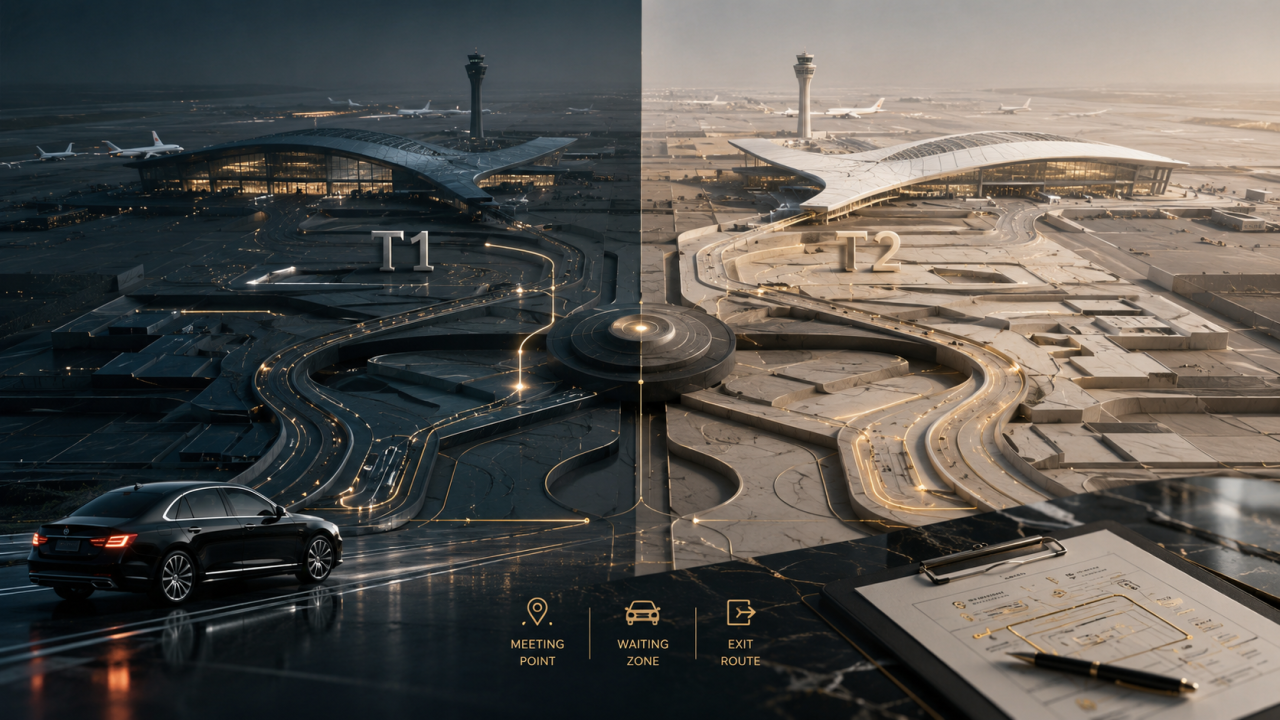
The Airport Arrival as the First Operational Signal
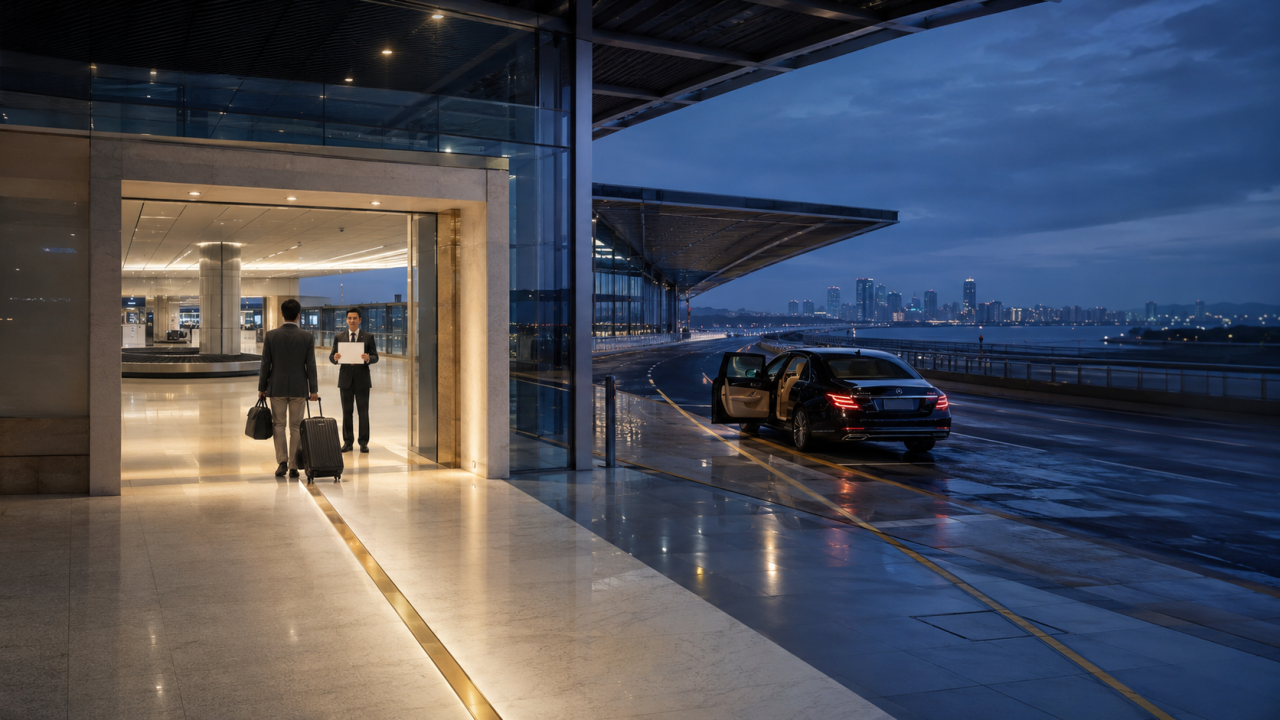
The executive's assessment of the visit begins before any meeting takes place. It begins at Incheon International Airport, in the minutes between clearing immigration and reaching the vehicle.
A meet-and-greet with a named board indicating the correct organisation, a chauffeur who can confirm the day's schedule in the executive's language, and a vehicle that is ready, clean, and calibrated to the right temperature, these are not small details. They are the first operational evidence that the host organisation has prepared the visit with care. Their absence, conversely, starts the visit with a low-grade uncertainty that carries into the first meeting.
Incheon is one of the world's highest-traffic international airports. On a busy arrival day, the gap between a prepared, positioned vehicle and an improvised pickup can be thirty minutes or more. For an executive with a 09:00 meeting in central Seoul, approximately forty to sixty minutes from the airport under normal traffic conditions, that margin does not exist.
How On-Time Arrival Builds Credibility Before Anyone Speaks
Senior executives visiting Korea for business often carry implicit assessments of the market and the people they are meeting. Arriving composed, on time, and without the visible friction of a logistics failure communicates something about the host organisation's operational culture before the first exchange.
Arriving late, even by fifteen minutes, changes the dynamic. It introduces an apology, a brief explanation, a small displacement of focus. The meeting begins slightly off-balance. In a first-time relationship or a high-stakes negotiation, that displacement is not trivial.
The inverse is also true. An executive who arrives having experienced a smooth, unhurried transfer, who has used thirty minutes in the vehicle to review notes, take a call, or simply decompress from a long flight, arrives in a different condition than one who has been navigating a confusing pickup point, waiting in an unfamiliar terminal, or managing a last-minute vehicle substitution. The quality of attention they bring to the first meeting is different. This is a measurable operational variable, not an abstraction.
The Compressed Schedule and the Domino Structure of Risk
Most executive visits to Korea are short. Two days is common; three is generous. Within that window, a typical schedule includes an airport transfer, hotel check-in, two to four meetings per day across different locations, often spanning Gangnam, Yeouido, and Jongno, a working dinner, and a return airport transfer. There is almost no slack.
In a schedule of this density, a single transfer delay does not affect only that transfer. It affects everything that follows. Consider a realistic scenario: a meeting in Gangnam runs twenty minutes over because the executive could not politely exit earlier. The next meeting is in Yeouido, twenty to thirty minutes away under normal conditions, forty or more in afternoon traffic on the Gangbyeon Expressway. The driver has not been briefed on the overrun. The vehicle was positioned for an on-time departure. By the time the executive reaches the lobby and the situation is communicated, the window has closed.
An operation designed to manage this risk looks different. The chauffeur is in contact with the internal coordinator throughout the day. Route alternatives for the Gangnam-to-Yeouido corridor have been pre-assessed that morning. When the meeting runs over, the coordinator is already aware and the driver has already moved to the adjusted departure position. The executive exits the building into a waiting vehicle with the revised arrival estimate already confirmed to the Yeouido host. The delay is absorbed rather than propagated.
This is the structural difference between a vehicle booking and a managed transfer operation. The first responds to events. The second anticipates them.
Unplanned Route Changes and the Cost of Inflexibility
Executive schedules in Korea change. A meeting concludes early and a call is added. A breakfast runs long and the morning schedule shifts by forty minutes. A host suggests a different venue at the last moment. These are not exceptional circumstances, they are normal features of high-level business travel.
An operation that cannot absorb these changes without friction introduces a specific kind of cost. The executive, or their travelling EA, must manage the logistics themselves: calling the driver, explaining the new location, confirming the vehicle is moving, recalculating whether the next commitment is still achievable. This is precisely the cognitive load that a well-designed executive transport operation is supposed to eliminate.
In practice, the ability to absorb unplanned changes depends on preparation that happened before the visit began: alternative routes identified, flexible positioning built into the schedule, and a single coordination point that can communicate changes to the driver without the executive needing to be involved. The executive's experience of this is simply that the visit moves cleanly. The work behind that experience is invisible to them by design.
The Vehicle as a Working and Recovery Environment
On a two-day Korea visit with six to eight meetings, the vehicle is where the executive spends a meaningful share of their waking hours. Between a long-haul flight, the time difference, and a schedule that may begin at 08:00 and end at 22:00, the transfers are not dead time, they are the only available windows for recovery, preparation, or focused work.
A cabin that is quiet, at the right temperature, with a stable mobile data connection and sufficient physical space to open a laptop or review documents serves a different function than one that is not. The difference is not comfort for its own sake. It is whether the executive arrives at each meeting in a condition to perform well, or whether the cumulative friction of the day's travel has visibly worn on them by the third or fourth meeting.
This is particularly relevant for executives arriving from significant time differences, North America, Europe, or the Middle East, where jet lag, combined with schedule density, creates a recovery deficit that only careful scheduling and physical environment management can partially offset. The vehicle is one of the few controllable variables in that equation.
Why Mobility Is Not a Support Function for Executive Visits
The conventional framing of ground transport in corporate travel is logistical: a necessary cost, managed to budget, evaluated on whether the vehicle arrived. This framing systematically undervalues what mobility actually does in a high-density executive visit.
What mobility does is hold the schedule together under real conditions, not the clean schedule in the itinerary document, but the actual schedule as it unfolds across a city with variable traffic, back-to-back commitments, and human unpredictability. It manages the executive's physical condition across a long, compressed day. It makes the first impression. It absorbs the small failures of timing before they become visible to the people the executive is meeting.
Operators and travel managers who treat this as a logistics category often discover its actual weight only when something goes wrong. The executive who arrived forty minutes late to the most important meeting of the visit, because the vehicle was not positioned for an early departure, provides a clarifying data point. The question is whether that data point comes from a live visit or from an operational design review before it.
For organisations hosting senior international visitors in Korea, the answer is worth establishing in advance. Wizmobility works with inbound brand operators, MICE planners, and corporate hospitality teams to structure ground mobility as a managed operational layer, not a booking service, but a coordinated system designed to protect schedule integrity across the full visit window.