A Good Vehicle Is Not Good Service: The Real Standards for Premium Mobility in Korea
Most global brands and MICE planners arriving in Korea evaluate their mobility partner on two things: vehicle model and chauffeur English proficiency. Both matter, but neither determines whether the operation will actually succeed. The real standard for premium mobility in Korea has shifted, and the gap between a good vehicle and good service is wider than most clients expect.
The Conventional Approach and Why It Falls Short
For most of the past decade, the default evaluation checklist for inbound brand mobility in Korea looked something like this: confirm the fleet is Genesis G90 or Mercedes-Benz S-Class, confirm chauffeurs speak English, confirm the operator has insurance. If all three checked out, the brief was awarded.
This was a reasonable shortcut when premium mobility in Korea was genuinely underdeveloped. Vehicle quality was inconsistent, English was rare, and insurance compliance was not universal. Checking these three criteria separated credible operators from the rest.
The problem is that this checklist no longer separates anything meaningful. Fleet standardisation on Genesis G90 is now common among any operator handling inbound brand work. Conversational English among chauffeurs is a baseline. Every credible operator carries proper coverage. When the checklist only filters out operators who have already been filtered out by the market, it is doing no useful work.
What the conventional approach misses is operational design, the work that happens before any guest enters a vehicle. And that work is where premium mobility is actually won or lost.
What Actually Determines Operational Quality
The distinction that matters is between vehicle procurement and operational design. A vehicle is an asset. An operation is a system of decisions made in advance, routes pre-walked at relevant times of day, chauffeurs matched to specific guests by language and assigned consistently across the operational window, interior specifications prepared to brand-specific standards, central dispatch coordination so that every vehicle's status is tracked in real time.
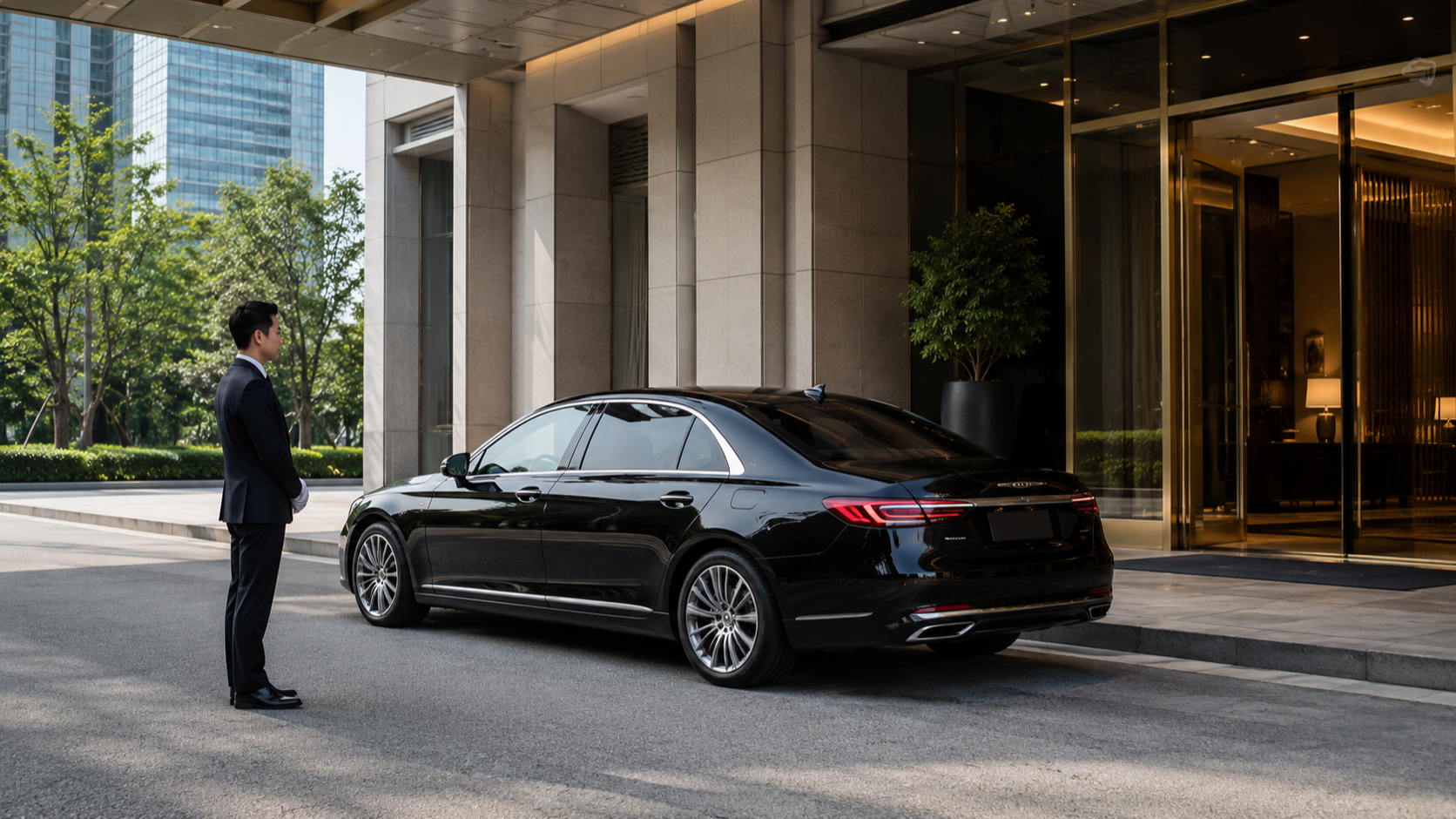
Consider what happens when a global maison runs a three-day hospitality programme in Seoul with 80 guests, 20 vehicles, and 14 nationalities. The vehicle fleet is identical across all 20 cars. The guests are not interchangeable. A Japanese brand director and a French editorial guest have different languages, different schedules, and different expectations of what the car moment means in their day. If the operator is simply dispatching the nearest available vehicle, the operation is running on logistics. If the operator has pre-assigned chauffeurs by language, pre-walked each route the night before, and pre-loaded the cabin environment with brand-specific materials, the operation is running on design.
The difference is not visible from the outside when everything goes well. It becomes visible when something does not, when a guest's schedule changes at 07:00, when a venue entrance is blocked, when a parallel group needs to be split across two simultaneous hotel exits. An operation built on design absorbs these moments without escalation. An operation built on dispatch does not.
Why This Distinction Rarely Appears in Briefing Documents
Part of the reason the conventional checklist persists is that operational design is harder to specify in a brief. "Genesis G90, English-speaking chauffeurs, comprehensive insurance" are legible, transferable, comparable across vendors. "Pre-walked routes, language-matched assignments, real-time dispatch coordination, brand-specific cabin preparation" require a different kind of evaluation, one that asks how the operator actually works, not what assets they hold.
Global procurement teams and inbound concierge desks are often evaluating Korea mobility from outside Korea, on compressed timelines, with limited ability to audit operational capability directly. The result is that the brief defaults to asset verification rather than process evaluation. Operators who have invested in operational infrastructure are assessed on the same criteria as operators who have not.
This is not a failure of the clients. It is a gap in how the industry has communicated what premium mobility in Korea actually requires. As noted in a previous Wizmobility insight on operational design versus booking, the framing of ground mobility as a procurement task systematically underweights the capabilities that most determine guest experience.
A More Useful Set of Evaluation Criteria
For inbound brand operations, MICE planners, and hotel concierge teams selecting a mobility partner in Korea, the following questions are more useful than the conventional checklist.
How does the operator handle schedule changes during the operational window? This is a stress test of dispatch infrastructure. An operator running on a manual dispatch model will escalate to the client. An operator running on a central coordination system will absorb the change and report the resolution.
How are chauffeurs assigned across multi-day operations? Consistent assignment, the same chauffeur with the same guest across the window, is an operational design choice, not a default. Ask whether assignments are fixed at the pre-brief stage or rotated by availability.
What is the pre-operational preparation process? Route pre-walking, chauffeur briefings specific to the event context, cabin preparation to brand specification, these are the inputs. Ask for a description of what happens in the 48 hours before Day One.
How does the operator communicate with hotel concierge and brand hospitality leads during the operation? The coordination interface matters as much as the vehicle. An operator who is reachable and proactive within the hospitality team's communication structure is operationally different from one who waits to be called.

Where the Industry Is Heading
The trajectory in Korea's premium mobility market is toward what might be called operational transparency, the expectation that an operator can document their process, not just their assets. Global hospitality brands that have run repeated inbound programmes in Korea are already asking for pre-operational briefing documents, post-operational debrief reports, and evidence of central dispatch capability. The fleet specification question is still there, but it is no longer the first question.
For operators, this shift rewards investment in process over investment in assets alone. A well-managed fleet of Genesis G90s run by an operationally disciplined team will outperform a larger fleet run on ad-hoc dispatch. The vehicle is the platform. The operation is the product.
For clients, brand hospitality teams, MICE planners, concierge leads, the implication is that the evaluation criteria need to evolve alongside the market. Korea's premium mobility infrastructure has matured. The briefing documents that evaluate it should reflect that maturity. Asking better questions at the selection stage is the most reliable way to ensure that the operation, when it runs, disappears from guest feedback, which is the only measure that matters.