How to Brief Your Ground Mobility Partner Before a Korea Inbound Program
Most inbound program failures in Korea trace back not to execution, but to an incomplete or mistimed brief. The routing errors, the missed tiering, the chauffeur who didn't know which guest to prioritise at door, these rarely happen because the operator lacked capability. They happen because the brief arrived late, covered the wrong variables, or left the operator guessing on the details that matter most. This guide gives MICE planners, DMC operators, and corporate travel managers a structured framework for what to share, in what sequence, before a Korea ground mobility program begins.
Why the Brief Determines Operational Performance
Ground mobility is often evaluated after an operation concludes. The post-program debrief identifies what went wrong. The vehicle was late. A guest was matched to the wrong chauffeur. A route through Gangnam added forty minutes that no one had anticipated. The instinct is to ask whether the operator performed. The more useful question is whether the operator was properly briefed.
Operational design, the pre-arrival work of route calibration, chauffeur assignment, venue coordination, and dispatch sequencing, depends entirely on the information the planner provides. A mobility partner cannot pre-walk a route that hasn't been confirmed. A chauffeur cannot be assigned by language if guest nationality data arrives the morning of departure. A dispatch team cannot build a communication chain without knowing who the on-site contact is.
The quality of the brief sets the ceiling. Execution can only reach as high as the information allows. For Korea inbound programs in particular, where multi-venue itineraries, compressed schedules, and VIP protocol requirements concentrate in short operational windows, the brief is the most consequential document in the program file.
The Briefing Timeline: When to Share What
A single comprehensive brief delivered 48 hours before day one is a common pattern. It is also one of the primary sources of operational failure. The variables a mobility partner needs to act on have different lead times, and compressing them into a single late document removes the time required to do the pre-operational work they depend on.
A structured briefing timeline for a Korea inbound program typically covers three phases:
10-14 days before arrival: Program overview, approximate fleet scale, primary venues and hotel base, known VIP designations, on-site contact names. This is the planning window. Route pre-walking, fleet allocation, and chauffeur assignment begin here.
3-5 days before arrival: Confirmed guest list with nationality and language notes, finalised itinerary with stop sequence and timing, venue access confirmations, any protocol requirements (government venues, private facilities, restricted zones). This is the preparation window. Chauffeur briefing documents, route files, and dispatch sequences are built from this data.
24-48 hours before arrival: Flight manifests, final vehicle-to-guest assignments, on-day communication contacts and escalation chain, any last-minute venue or schedule changes. This is the confirmation window. Dispatch is set; exceptions require a direct escalation path.
Each phase closes a set of decisions. Information that arrives after its window forces those decisions to be made in real time, which is precisely the condition under which operational errors occur.
Routing Variables Unique to Korea
Korea's urban routing, particularly in Seoul, presents variables that planners familiar with other Asia-Pacific cities may not anticipate. Understanding these in advance allows the mobility partner to build them into the route design rather than manage them reactively on the day.
Traffic pattern compression. Seoul's major arterials, Gangnam-daero, Teheran-ro, Olympic-daero along the Han River, carry predictable congestion windows, but these windows shift significantly by day of week and season. A route pre-walked on a Tuesday afternoon may perform differently on a Thursday morning during peak corporate commute hours. The brief should specify which days and approximate times each route segment will be used.
Multi-stop sequence design. Inbound brand programs frequently combine hotel bases in Hannam-dong or Yeouido with event venues in Cheongdam, exhibition spaces in Coex, or government facilities in Gwanghwamun. The sequence in which stops are chained, and whether the fleet is centralised or distributed between stops, has significant implications for fleet sizing and dispatch timing. These decisions require confirmed stop addresses and sequencing before route design can begin.
Seasonal and event-driven disruption. Seoul hosts a concentrated calendar of international events, trade shows, fashion weeks, government summits, that create localised traffic and access disruption. According to Korea Tourism Organization, Korea's inbound event calendar has grown substantially in recent years, with Seoul regularly hosting multiple concurrent international programs. A brief that includes program dates allows the mobility partner to cross-reference the broader event calendar and flag potential conflicts.
Intercity transfers. Programs that combine Seoul with Busan, Gyeongju, or Jeju introduce a separate routing layer. KTX connections, domestic flight transfers from Gimpo or Incheon, and intercity road transfers each have distinct lead times and coordination requirements. These segments should be briefed separately from urban routing, with confirmed transport mode and station or terminal details.
VIP Protocol Tiering and Guest Classification
Not all guests on a program require the same operational treatment. This is standard in MICE and corporate travel management. What varies by program, and what the brief must make explicit, is the tiering logic and its operational implications.
A clear VIP tiering brief covers three things: who is in each tier, what the tier means in operational terms, and which chauffeur-to-guest assignments the tier determines.
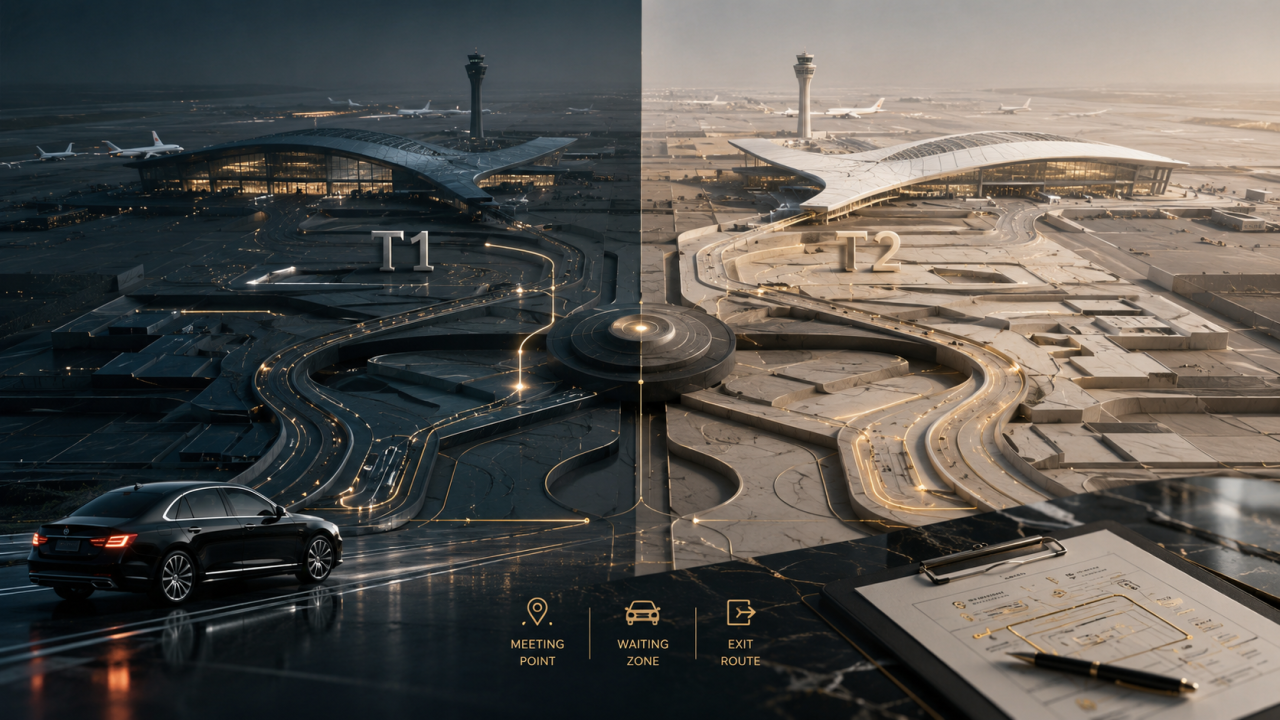
Tier definition. Tier designations (T1, T2, T3, or equivalent) should be defined not just by guest seniority but by operational behaviour. A T1 guest may require: a dedicated chauffeur across the full program window, language-matched assignment, a specific vehicle class regardless of availability at dispatch, and priority in schedule conflict resolution. A T3 guest may share fleet resources in coordinated group movements. The brief should make these distinctions explicit rather than leaving interpretation to the operator.
Guest language and nationality. Korea's inbound brand programs draw guests from Japan, China, Southeast Asia, Europe, and the Americas, often within the same program. Chauffeur language assignment is only possible if nationality data is provided in advance. A brief that lists guest names without language or nationality data removes the ability to match chauffeurs by communication requirement.
Protocol exceptions. Some guests may have security requirements, mobility needs, or personal preferences (specific vehicle class, no co-passengers, cabin environment preferences) that require documentation separate from the main guest list. These exceptions should be flagged individually in the brief, with the relevant operational response specified.
Venue Access Constraints and On-Site Logistics
Venue access is one of the most frequently under-briefed variables in Korea inbound programs, and one of the most operationally consequential. Access constraints that are discovered on arrival, rather than built into the route design, force real-time improvisation that degrades the guest experience.
The brief should address four venue access variables for each stop on the program:
Vehicle entry point: The designated entry for guest vehicles, which may differ from the main public entrance and from the freight or staff entrance. Many Seoul venues, particularly hotels in Hannam-dong and Cheongdam galleries, have specific porte-cochère protocols.
Waiting zone: Where vehicles hold between arrivals and departures. In dense urban areas, on-street waiting is often prohibited or impractical. Confirming the designated waiting zone before the program avoids chauffeurs circling or parking at distance.
Access credentials: Government venues, private clubs, and some hotel facilities require advance vehicle registration. This process has a lead time of 24-72 hours in most cases. The brief must include the venue contact responsible for vehicle access registration.
Venue-side contact: The name and direct mobile number of the on-site coordinator at each venue. This is the person the dispatch team contacts if a guest's departure is delayed, a vehicle needs to reposition, or access instructions change on the day.
For programs that include government facilities or diplomatic venues, common in Korea's MICE calendar, access constraints may include security screening zones, vehicle inspection points, and time-window restrictions. These should be briefed explicitly, with the relevant protocol documentation included if available.
On-Day Communication Chains
An operation with complete pre-program briefing can still fail on the day if the communication chain breaks. The on-day communication structure, who contacts whom, through which channel, for which category of exception, is itself a briefing deliverable.
The brief should establish a three-level communication chain:
Level 1, Guest-facing: The chauffeur handles all direct guest communication during transit. The chauffeur should have confirmed contact details for each assigned guest and should not relay questions or requests through dispatch unless the situation requires it. The brief should confirm whether guests are expected to communicate directly with their chauffeur or through a program coordinator.
Level 2, Program coordinator to dispatch: The on-site program coordinator (the planner's representative on the ground) communicates schedule changes, guest movements, and exceptions directly to the mobility partner's dispatch team. This channel should be active from vehicle staging through final drop-off. The brief should confirm the dispatch contact name and direct number, and establish the expected response time for schedule change notifications.
Level 3, Escalation: For situations that cannot be resolved at Level 1 or Level 2, a medical situation, a security incident, a major schedule disruption affecting the full fleet, the brief should name the escalation contact on both sides: the program director on the planner's team and the operations lead on the mobility partner's side. This contact pair should exchange direct numbers before day one.
Communication channel preference matters in Korea. WhatsApp is widely used for international programs. KakaoTalk is standard for Korea-side coordination. The brief should confirm which channel each communication tier will use, to avoid contact attempts going to the wrong platform during time-sensitive moments.
What Good Briefing Looks Like in Practice
The programs that run without visible incident, the ones where guests arrive on time, chauffeurs know their assignments, and the operations team never needs to improvise, are not the result of flawless execution under pressure. They are the result of complete briefing that removed the conditions under which pressure arises.
In practice, a complete Korea inbound ground mobility brief is a document set, not a single file. It includes: a program overview with confirmed itinerary and fleet scale; a guest list with tier designation, nationality, and language notes; a venue sheet with access points, waiting zones, and venue-side contacts; a communication chain with names and channel confirmations; and a protocol exceptions log for any guests with individual requirements.
The brief is delivered in phases, not in a single document drop. Each phase closes a set of decisions that the mobility partner needs to act on, route design, chauffeur assignment, dispatch sequencing, access registration, with enough lead time to complete the work properly.
Wizmobility operates Korea inbound programs across this full briefing structure, from planning window through on-day dispatch. The operational standard the brief enables is what determines what guests experience. That standard is set before the first vehicle moves.